Tyton Joint Ductile Iron Pipe: Fast Installation Guide for Site Teams
 By Mr. Xiao | Pipeline Systems Expert at Topsun | Updated for 2026
 Let me paint a picture that every infrastructure project manager in the region knows well. You have a crew of eight laying a DN300 water main through a dense residential area of Bandung or São Paulo. The trench is open, the clock is running, and the residents have been promised water restoration by Friday. One of your junior workers fumbles with a joint connection for twenty minutes. The foreman calls me on WhatsApp asking if there is a faster way.
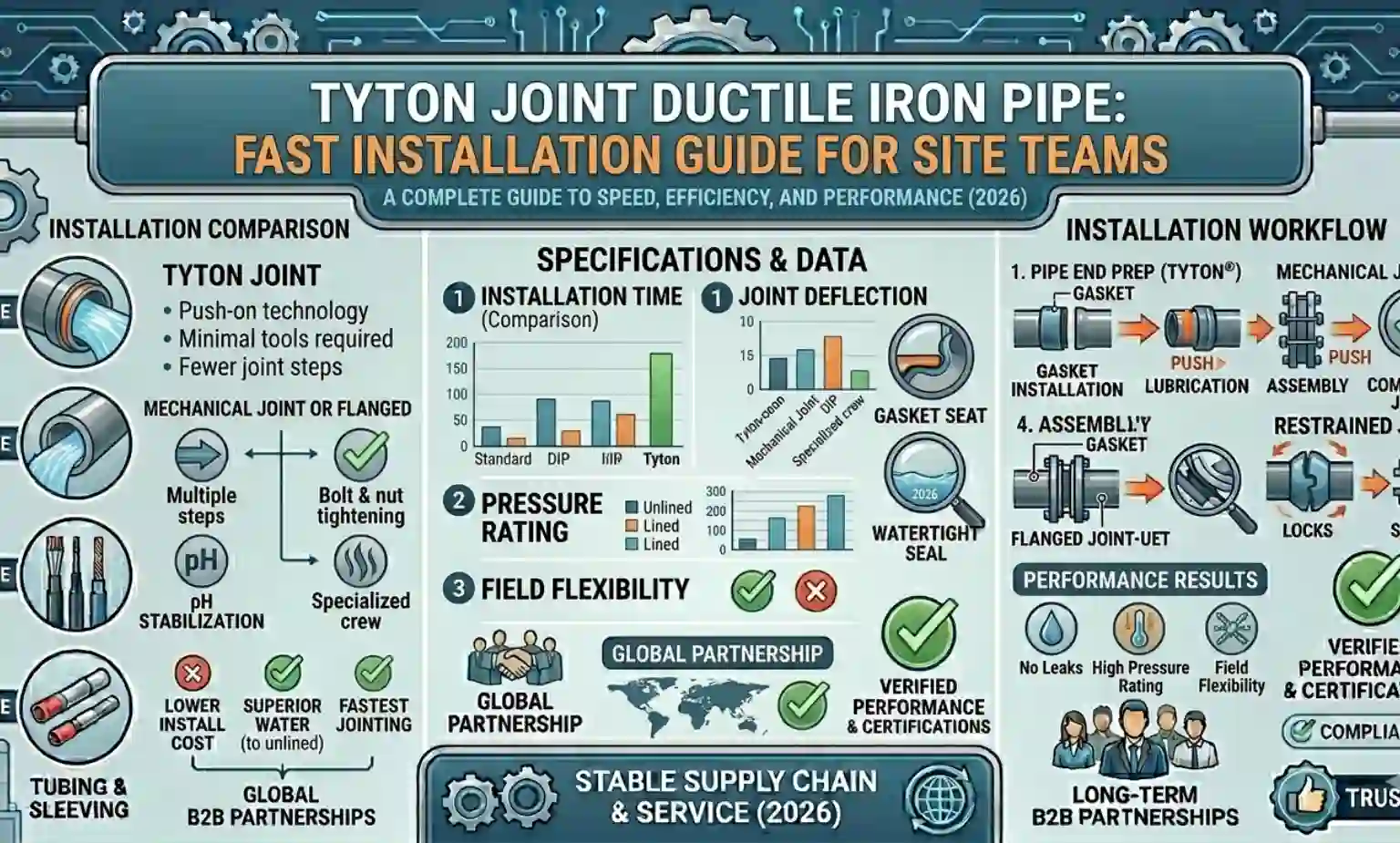
There is. And it has existed for decades. The problem is that across construction sites in South America and Southeast Asia, the tyton joint ductile iron pipe—one of the most installer-friendly jointing systems ever engineered—is routinely under-utilized because site teams were never properly briefed on how it actually works. Instead, they default to flanged connections or over-complicate the push-on assembly with improvised tools and excessive lubricant.
In 2026, as municipal infrastructure programs accelerate across Indonesia, Vietnam, Brazil, Colombia, and their neighbors, labor efficiency on the trench line directly determines whether a contractor finishes on budget. This guide is written specifically for the person holding the clipboard on site—the foreman who needs to brief a mixed crew each morning, often in a second language, on exactly how to make a correct, watertight push-on joint DI pipe connection in under four minutes per joint.
Table of Contents
What the Tyton Joint Actually Is (And Why It Works)
Tools You Need vs. Tools You Do Not Need
Step-by-Step Joint Assembly: The Four-Minute Method
The Tyton Gasket: Selection, Storage, and Common Failures
Labor Cost Comparison: Tyton vs. Flanged vs. Welded
Frequently Asked Questions (FAQ)
1. What the Tyton Joint Actually Is (And Why It Works)
The Tyton joint—formally known as the T-Type push-on joint—was originally developed by U.S. Pipe and has since become a globally standardized connection method for ductile iron water mains. Today it is manufactured to ISO 2531 and EN 545 dimensional requirements and is the dominant jointing system for municipal water pipelines worldwide precisely because it requires zero mechanical fasteners, zero welding, and zero specialist labor.
The geometry is elegant. Each pipe length features a bell end (socket) at one end and a plain spigot end at the other. Inside the bell sits a precisely machined groove that holds the tyton gasket—a single-piece rubber ring with a distinctive heel-toe cross-sectional profile. When the spigot is pushed into the socket, the spigot's chamfered leading edge contacts the gasket and compresses it into a wedge shape within the groove. The harder the internal water pressure pushes on the joint from inside, the more firmly the gasket is compressed and sealed.
This is not a friction-dependent seal. It is a pressure-activated seal. The joint becomes tighter under operating pressure than it was at the moment of assembly. This is why a correctly made tyton joint routinely achieves hydrostatic test pressures of 2.5 times the pipe's rated operating pressure without failure.
2. Tools You Need vs. Tools You Do Not Need
One of the most common causes of slow installation and joint failures on regional projects is crews arriving at the trench with either too many improvised tools or none at all. Here is a clear breakdown.
| Item | Required? | Purpose / Notes |
|---|---|---|
| Approved Joint Lubricant | ✅ Mandatory | Water-soluble, food-grade (NSF/ANSI 61 compliant or equivalent). Never substitute with petroleum grease, engine oil, or cooking oil—all will degrade the EPDM gasket and void the water quality compliance. |
| Pipe Laying Sling / Excavator Attachment | ✅ Required for DN ≥ 200 | Controlled lowering prevents socket damage on impact with trench bed. For DN80–DN150, trained manual handling is acceptable on flat terrain. |
| Reference Line / Paint Mark | ✅ Mandatory | Mark the insertion depth on the spigot before pushing. The visible gap between the mark and socket face confirms full engagement without over-insertion. |
| Hydraulic Pushing Tool / Chain Block | ⚠️ Only for DN ≥ 500 | Large diameter pipes (DN500 and above) require a controlled mechanical push due to gasket compression resistance. A steel bar-and-bucket lever arrangement is the accepted field method for smaller diameters. |
| Welding Equipment | ❌ Not Required | The tyton joint requires no welding whatsoever. If a subcontractor quotes welding labor for standard push-on joint DI pipe installation, challenge the quote immediately. |
| Torque Wrenches / Bolts / Gasket Compressors | ❌ Not Required | These are tools for flanged joints only. Bringing them to a tyton-joint site wastes mobilization cost and confuses crews unfamiliar with the distinction. |
3. Step-by-Step Joint Assembly: The Four-Minute Method
Below is the exact sequence I brief construction supervisors on when Topsun supplies Tyton Joint (T-Type Push-on) Ductile Iron Pipe DN80–DN2600 to a new project. With a trained crew of two workers, each joint below DN400 should be fully assembled in under four minutes.
Step 1 — Inspect and Clean Both Ends (45 seconds)
Before lowering the pipe into the trench, visually inspect the socket and spigot for cracks, chips, or embedded grit from transport. Wipe the socket interior and the spigot plain end clean with a dry rag. Any soil, sand, or hardened cement mortar debris inside the socket will prevent the gasket from seating correctly and cause a joint leak.
Step 2 — Seat the Tyton Gasket (30 seconds)
Remove the tyton gasket from its protective packaging. Fold it into a kidney shape (never a figure-eight—this stresses the rubber and creates voids) and insert the heel of the gasket into the socket groove. Work around the full circumference with your fingers until the gasket sits uniformly with no visible humps or twists. A correctly seated gasket will feel slightly resistant when pressed with a thumb and spring back to its original position.
Step 3 — Lubricate (30 seconds)
Apply approved joint lubricant generously to the exposed face and inner lip of the seated gasket using a brush or gloved hand. Then coat the full circumference of the spigot plain end—from the chamfer back to the insertion depth mark. Do not skip lubricating the spigot. This is the single most common cause of excessive pushing force requirements and torn gaskets in the field.
Step 4 — Align and Push (90 seconds)
Lower the new pipe into the trench so the spigot is axially aligned with the previously laid pipe's socket. For pipes DN80–DN400, two workers can use a steel crowbar against the pipe barrel (never against the socket bell) with a timber pad to apply a steady horizontal pushing force. Push smoothly and continuously until the insertion depth mark is flush with or just inside the socket face. Do not rock the pipe side-to-side during insertion—angular movement during pushing is reserved for after full insertion.
Step 5 — Set Angular Deflection (30 seconds)
After full insertion, the tyton joint allows up to 5 degrees of angular deflection from the pipe centreline. For gentle horizontal or vertical curves, apply the required deflection angle at this stage before backfilling begins. Never exceed the rated deflection angle. Exceeding it exposes the gasket heel and creates a leak path that will not be evident during low-pressure testing but will fail under operational surge.
4. The Tyton Gasket: Selection, Storage, and Common Failures
The tyton gasket is a single-component rubber ring and it is the only consumable in the entire tyton joint system. Despite its simplicity, it is the element most frequently mishandled on regional projects. Here is what every site supervisor must understand.
Material Selection
Gaskets for drinking water mains must be manufactured from EPDM (Ethylene Propylene Diene Monomer) rubber. EPDM is specifically resistant to chlorinated water, UV exposure during trench-side storage, and the temperature cycling common in tropical climates. Do not accept SBR (Styrene-Butadiene Rubber) gaskets for potable water applications—SBR degrades significantly faster in chlorinated environments and is only acceptable for non-potable irrigation or drainage pipelines.
Storage on Site
Gaskets must be stored in a shaded, cool location away from direct sunlight and petroleum products. UV and ozone exposure causes surface cracking (ozone crazing) in EPDM within weeks in tropical climates. A cracked gasket will appear undamaged during insertion but will develop micro-leaks within months of pressurization. Always store gaskets in their original packaging until the moment of use.
The Three Most Common Gasket Failures
Roll-out: The gasket rolls over itself during spigot insertion due to insufficient lubrication or too-rapid pushing. Result: the joint passes initial testing but leaks within weeks as the deformed gasket relaxes. Prevention: adequate lubrication and steady, non-rotational pushing force.
Twist: The gasket is installed with a visible spiral twist in the groove. Result: two void points exist at the twist crossover locations where the gasket does not contact the spigot uniformly. Prevention: always inspect the full gasket circumference after seating, before lubrication.
Wrong size: A gasket sourced locally that is nominally the correct DN but from a different manufacturer with different cross-sectional dimensions. Result: either insufficient compression (undersized) or inability to push home (oversized). Prevention: only use gaskets supplied with or approved for the specific pipe manufacturer's socket geometry.
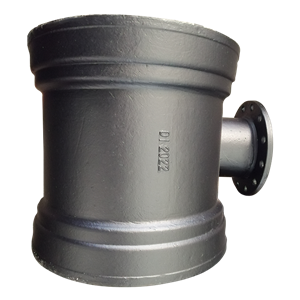
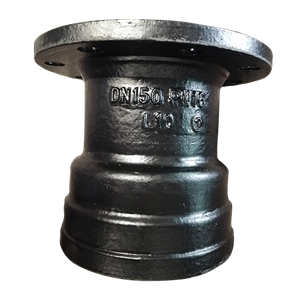
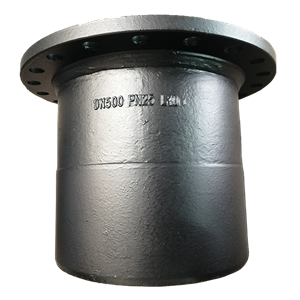
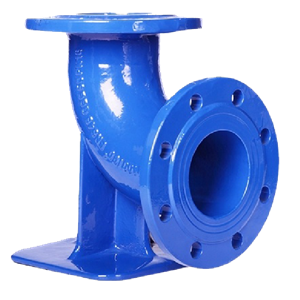
Recommended Product: Topsun Tyton Joint (T-Type Push-on) Ductile Iron Pipe DN80–DN2600 with EPDM Gasket
5. Labor Cost Comparison: Tyton vs. Flanged vs. Welded
For a site manager accountable to a project budget, the jointing method directly translates into daily output rates and total pipe-laying cost. The numbers below are based on realistic field productivity figures for mixed-skill crews typical of infrastructure projects in Southeast Asia and South America.
| Factor | Tyton Push-on Joint | Flanged Joint | Welded Steel Joint |
|---|---|---|---|
| Avg. Assembly Time per Joint (DN200) | 3–5 minutes | 20–35 minutes | 45–90 minutes |
| Specialist Labor Required? | No — general civil crew | Minimal — torque wrench literacy | Yes — certified welder mandatory |
| Tools Required | Lubricant brush, crowbar, timber pad | Torque wrench set, bolt tensioner | Welding machine, grinder, PPE, gas supply |
| Joints per 8-Hour Crew Shift (DN200, 6m pipes) | ~80–100 joints | ~20–30 joints | ~8–12 joints |
| Rework Risk (Poor Skill Crew) | Low — visual inspection sufficient | Medium — bolt torque errors common | High — weld quality highly skill-dependent |
| Angular Flexibility | Up to 5° per joint | Zero — rigid connection | Zero — rigid connection |
On a typical 2km DN200 water main with 6m pipe lengths, that is approximately 333 joints. The productivity gap between a tyton push-on joint crew and a flanged joint crew can translate to a difference of 8–12 working days. At regional daily labor rates, that gap represents a meaningful five-figure saving on a single contract.
6. Frequently Asked Questions (FAQ)
Q: Can a tyton joint be disassembled and re-used if the pipe needs to be repositioned after pushing?
A: Yes, but with caution. A tyton joint can be pulled apart and re-made if the gasket is undamaged. After pulling, always remove the gasket, inspect it fully for twisting, surface cuts, or deformation, and re-lubricate before the second assembly. Never re-use a gasket that has been rolled out during a failed push—replace it. On most projects in Southeast Asia and South America, site supervisors keep a 5% spare gasket quantity on hand for exactly this scenario.
Q: My crew says the spigot will not push home even with lubricant. What is wrong?
A: There are three likely causes. First, the gasket may be twisted or doubled over in the groove—pull back, remove, and re-seat it. Second, the spigot chamfer may have been damaged (blunted) during transport, causing it to catch the gasket lip instead of sliding under it—a few passes with a hand file to restore the chamfer angle usually resolves this. Third, on very tight diameter tolerances in tropical heat, the rubber gasket expands slightly—extra lubricant on the spigot face (not just the chamfer tip) makes a measurable difference.
Q: Does the tyton joint require concrete thrust blocks at bends?
A: Yes—standard tyton push-on joints are flexible but unrestrained, meaning they do not resist axial pull-out forces generated at bends, tees, and reducers under operating pressure. Concrete thrust blocks are required at all changes of direction and branch points. If site conditions do not allow thrust block construction (rocky ground, high water table, or confined urban spaces), specify a Self-Anchored Ductile Iron Pipe with Restrained Joint instead.
Q: Can the same tyton pipe be used for both water supply and sewage drainage on the same project?
A: No—not interchangeably. Water supply pipes are manufactured to ISO 2531 or EN 545 with cement mortar or polyurethane internal lining approved for potable water. Sewage pipes are manufactured to EN 598 with High Alumina Cement lining for acid resistance. The external marking on the pipe barrel (W for water, S for sewage) must be matched to the correct service. Cross-installation is a compliance failure and will be flagged during consultant inspection.
The tyton joint ductile iron pipe system does not require specialized engineers, expensive equipment, or long crew training programs to deliver high-quality, long-life connections. What it does require is a site supervisor who understands the five assembly steps, enforces correct gasket handling, and briefs the crew clearly before the first pipe goes into the trench. Get that discipline in place, and a motivated team of four can routinely outperform larger flanged-joint crews at a fraction of the total labor cost.
Ready to Order Tyton Joint DI Pipes for Your Infrastructure Project?
Topsun supplies ISO 2531 / EN 545 certified Tyton Joint Ductile Iron Pipes DN80–DN2600 with EPDM gaskets and full installation documentation to South America and Southeast Asia. Fast lead times, competitive pricing, and direct factory technical support.
Request a Project Quote WhatsApp Mr. XiaoMr. Xiao
Mr. Xiao is a senior pipeline systems expert at Shanghai Topsun Industrial Co., Ltd. He has supported construction teams across Africa, Southeast Asia, and South America with on-site technical guidance and procurement documentation for ductile iron pipe jointing systems, with a focus on reducing installation cost and improving field quality outcomes.
International Organization for Standardization. ISO 2531: Ductile iron pipes, fittings, accessories and their joints for water applications.
European Committee for Standardization. EN 545: Ductile iron pipes, fittings, accessories and their joints for water pipelines — Requirements and test methods.
American Water Works Association. AWWA C111/A21.11: Rubber-Gasket Joints for Ductile-Iron Pressure Pipe and Fittings.
NSF International. NSF/ANSI Standard 61: Drinking Water System Components — Health Effects (Lubricant compliance reference).