ISO2531 vs EN545: Ductile Iron Pipe Standards for EPC Contractors
 By Mr. Xiao | Pipeline Systems Expert at Topsun | Updated for 2026
If you are an EPC contractor bidding on municipal water infrastructure in the Middle East or Africa, tender documents can often feel like a minefield of overlapping codes. One of the most common issues I see on my desk at Shanghai Topsun Industrial Co., Ltd. involves a single, frustrating line in a Bill of Quantities: "Provide ductile iron pipes according to ISO2531 or EN545."
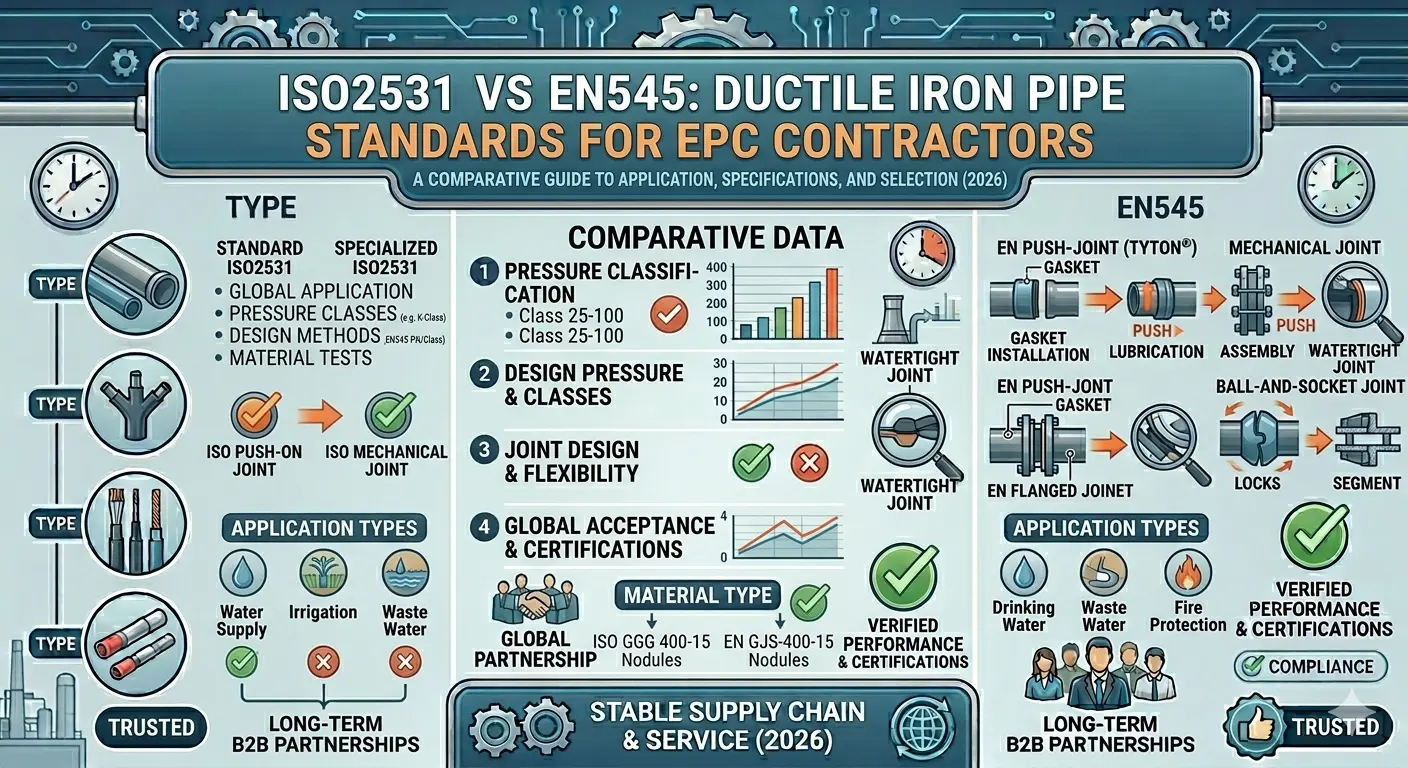
While the phrase makes them sound interchangeable, treating them as identical during the procurement phase can lead to rejected submittals, delayed shipments, or destroyed profit margins. During our work on the Dire Dawa Urban Water Supply Project, strict adherence to consultant specifications was the only way to avoid costly rework. In 2026, as consultants enforce stricter anti-corrosion and pressure metrics, understanding the nuances of ductile iron pipe standards is mandatory.
This technical brief will dissect the ISO2531 vs EN545 debate, breaking down the exact differences in wall thickness, protective coatings, and compliance criteria so you can confidently source the correct material for your cross-border engineering projects.
Table of Contents
The Fundamental Distinctions of the Standards
Wall Thickness: K-Class versus C-Class
External Coatings and Zinc Density Requirements
How to Avoid EPC Procurement Pitfalls
Frequently Asked Questions (FAQ)
1. The Fundamental Distinctions of the Standards
Both standards apply explicitly to ductile iron pipes, fittings, and accessories used for the conveyance of water for human consumption. However, their origins dictate their acceptance in different global markets.
ISO 2531 is published by the International Organization for Standardization. It is a globally recognized benchmark and is heavily favored in government tenders across Asia, the Middle East, and various African nations.
EN 545 is governed by the European Committee for Standardization. An EN545 ductile iron pipe is legally required to meet specific European water directives. If your EPC project in Africa is funded by European agencies (like the EIB or AFD) or managed by European consulting firms, they will almost exclusively demand EN 545 compliance.
2. Wall Thickness: K-Class versus C-Class
The biggest point of confusion for procurement engineers is pipe wall thickness. Historically, both standards used the "K-Class" formula (where thickness e = K(0.5 + 0.001DN)). A K9 pipe meant a specific, heavy wall thickness.
Modern revisions have shifted this paradigm, but the two standards handled the transition differently, which directly impacts your material cost and weight estimations.
| Specification Area | ISO 2531 (Current Revisions) | EN 545 (Current Revisions) |
|---|---|---|
| Classification System | Recognizes both K-Class (e.g., K9) and C-Class (PFA based). | Strictly uses C-Class (e.g., C25, C30, C40). K-class is obsolete. |
| Minimum Wall Thickness | Nominal thickness explicitly defined by K-factor or C-class tables. | Optimized based on Allowable Operating Pressure (PFA). |
| Project Application | Broader acceptance in legacy networks. | Mandatory for modern EU-funded infrastructure. |
| Pipes Available | ISO2531 Class K9 Ductile Iron Pipes | EN545 Class C40/C30 Ductile Iron Pipes |
If a tender strictly specifies EN 545:2010 or newer, quoting a legacy "K9" pipe might result in technical disqualification, even if the K9 pipe is physically thicker and heavier than the required C-class equivalent.
3. External Coatings and Zinc Density Requirements
Another area where ISO2531 vs EN545 diverges is in the minimum allowable mass for the external metallic zinc coating—a critical factor for pipelines buried in the highly corrosive, saline soils often found in the Middle East.
Standard Zinc Mass: ISO 2531 traditionally requires a minimum active zinc coating of 130 g/m². Many EPCs default to this baseline to keep costs low.
Enhanced Zinc Mass: Under EN 545, the minimum requirement for standard zinc coating is often higher (up to 200 g/m²), or it heavily mandates the use of zinc-aluminum alloys (400 g/m²) for aggressive soils.
Furthermore, while an ISO2531/EN545/EN598 Class K9 Ductile Iron Pipe with External Bituminous Coating is widely manufactured, EN 545 strongly encourages finishing layers of blue epoxy (minimum 70 microns) rather than traditional black bitumen, specifically to visually distinguish potable water lines from sewage lines.
4. How to Avoid EPC Procurement Pitfalls
Over the years at Topsun, we have assisted dozens of contractors in correcting their BoQ (Bill of Quantities) before submission. Here is what you need to verify:
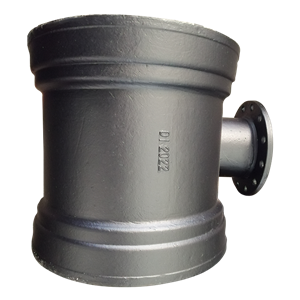
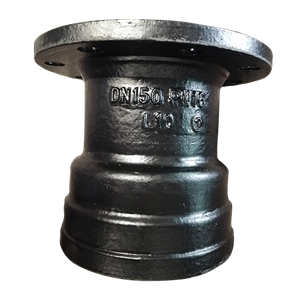
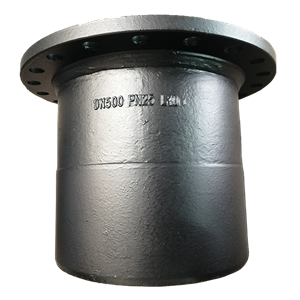
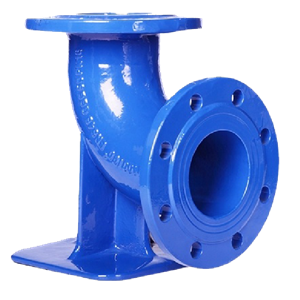
First, check the flange drilling standards. While push-on Tyton joints are mostly identical between the two standards, flanged fittings (like an EN545 Ductile Iron Loose Flange Fitting) must align with EN 1092-2 (PN10/PN16/PN25). Ensure your valves and water meters share the exact same drilling pattern.
Second, standardize your documentation. European consultants require specific Type Test certificates. Supplying a pipe that physically meets EN 545 but only has ISO 2531 documentation from the mill will cause handover delays.
Recommended Material: Topsun's ISO2531/EN545 Class K9 Ductile Iron Pipes for Drinking Water Supply
5. Frequently Asked Questions (FAQ)
Q: Can I supply ISO 2531 pipes if the tender specifies EN 545?
A: Generally, no. While the pipes may be manufactured in the same facility using similar iron grades, EN 545 requires specific markings, C-class pressure ratings, and often stricter zinc/epoxy coating metrics. You must request a formal deviation from the consulting engineer before supplying ISO 2531.
Q: Are the internal cement mortar linings identical in both standards?
A: Yes, both ISO 2531 and EN 545 reference the same requirements (often pointing to ISO 4179) for centrifugally applied cement mortar linings (Sulfate Resistant Portland Cement or Blast Furnace Slag Cement) for drinking water.
Q: Why do Middle Eastern tenders still ask for Class K9 instead of C-Class?
A: Many regional water authorities in the Middle East and Africa base their standard specifications on legacy manuals written before 2010. They prefer the conservative, known wall thickness of a K9 pipe over the optimized thickness of modern C-class pipes. Topsun continues to manufacture full K9 ranges to support these specific regional demands.
Navigating ductile iron pipe standards does not have to be a bottleneck for your procurement team. By identifying whether your project truly demands the strict European compliance of an EN545 ductile iron pipe or the robust international standard of ISO 2531, you can accurately forecast your costs and protect your project timeline.
Need accurate pricing for your EPC tender?
Topsun supplies fully compliant ISO 2531 and EN 545 ductile iron pipeline systems to the Middle East and Africa.
Get a Quote for Your Project WhatsApp Mr. XiaoMr. Xiao
Mr. Xiao is a senior pipeline systems expert at Shanghai Topsun Industrial Co., Ltd. He specializes in cross-border procurement compliance and has successfully managed the supply chain for major EPC water projects across Africa and the Middle East.
International Organization for Standardization. (2026). ISO 2531: Ductile iron pipes, fittings, accessories and their joints for water applications.
European Committee for Standardization. EN 545: Ductile iron pipes, fittings, accessories and their joints for water pipelines - Requirements and test methods.
Project Archives. Dire Dawa Urban Water Supply and Public Health Project Documentation, Shanghai Topsun Industrial Co., Ltd.