Babille Water Supply Project: Topsun Ethiopia Pipeline Case Study
 By Mr. Xiao | Pipeline Systems Expert at Topsun | Updated for 2026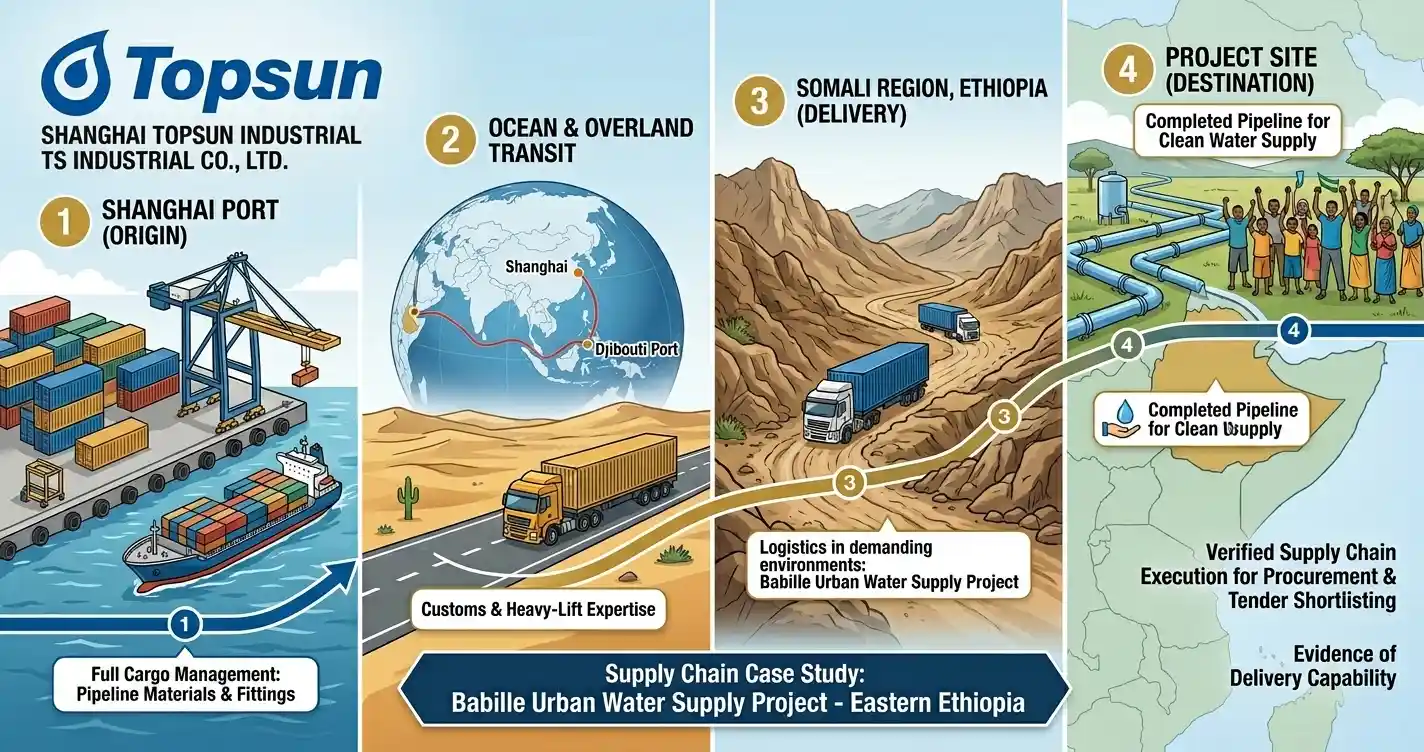
When a government tender committee evaluates an international pipeline supplier for a critical water infrastructure project, the single most important question on the table is not price. It is not even technical compliance. It is this: has this supplier ever actually delivered, under pressure, in conditions like ours?
For African government procurement officers and tender evaluation boards, that question carries particular weight. The continent's infrastructure environment is unlike any other—unpredictable inland logistics, fragmented customs frameworks, extreme terrain variation between project zones, and communities that have waited years or decades for reliable drinking water. A supplier that performs well on paper but collapses under real field conditions is not just a commercial failure. It is a public health failure.
This case study documents the full supply chain execution of Shanghai Topsun Industrial Co., Ltd. on the Babille Urban Water Supply Project in the Somali Region of eastern Ethiopia—one of the most logistically demanding pipeline delivery environments we have encountered in over fifteen years of cross-border trade. It is published specifically for procurement decision-makers and tender evaluation committees who need verified evidence of delivery capability before shortlisting a supplier.
Table of Contents
Project Background: Why Babille Was Not a Standard Assignment
Scope of Supply: Materials and Technical Specifications
Challenge One — Inland Logistics from Port of Djibouti
Challenge Two — Terrain and Pipeline Routing Complexity
Challenge Three — Documentation and Customs Compliance
Project Outcome and Delivery Performance
What This Means for Your Procurement Committee
Frequently Asked Questions (FAQ)
1. Project Background: Why Babille Was Not a Standard Assignment
Babille is a small town in the East Hararghe Zone of the Somali Regional State of Ethiopia, located approximately 560 kilometres east of Addis Ababa by road. The town sits at a junction of the main highway corridor toward Jigjiga and the Somali border—a position that made it a logical priority for the Ethiopian government's urban water supply expansion program, but also placed it at the end of a long, difficult, and congested logistics corridor.
The Babille Urban Water Supply Project was designed to deliver a reliable piped water supply system to a rapidly growing urban population that had historically depended on seasonal water sources of inconsistent quality and availability. For the communities involved, this was not an infrastructure upgrade. It was a transition from intermittent access to reliable, year-round potable water—a change with direct implications for public health, school attendance, and economic productivity at the household level.
Topsun was contracted as the pipeline material supplier to provide the ductile iron pipe network that would form the backbone of the distribution system. From the moment the contract was signed, three challenges were immediately apparent to our project team: the inland logistics corridor from the Port of Djibouti, the terrain demands of the pipeline routing, and the documentation complexity of Ethiopian customs and project compliance requirements. None of these were insurmountable. None of them was simple.
2. Scope of Supply: Materials and Technical Specifications
The pipeline material scope for the Babille project covered the primary transmission main and the urban distribution network. The specified materials were required to meet international drinking water standards appropriate for a gravity-fed and partially pumped network in a hot, semi-arid climate with aggressive soil conditions.
| Supply Item | Specification | Protective System |
|---|---|---|
| Transmission Main Pipes | ISO 2531 / EN 545 Ductile Iron Pipe, DN200–DN400, Class K9 | Internal: Centrifugal cement mortar lining (ISO 4179) External: Metallic zinc spray (≥130 g/m²) + bituminous finishing coat |
| Distribution Network Pipes | ISO 2531 / EN 545 Ductile Iron Pipe, DN80–DN150, Class K9 | Internal: Cement mortar lining (SRPC for soft water zones) External: Zinc spray + bituminous coating |
| Joint System | Tyton T-Type Push-on Joint with EPDM gaskets | EPDM gaskets rated for chlorinated drinking water; 5° angular deflection capacity for terrain adaptation |
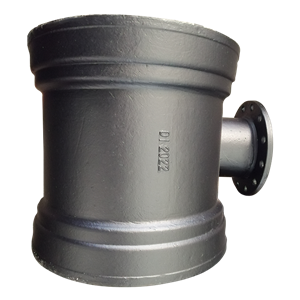
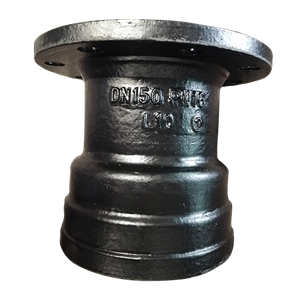
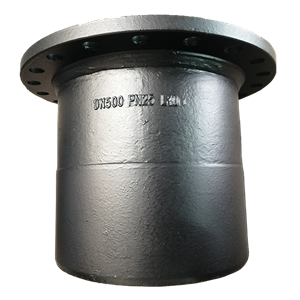
| Fittings Package | Ductile iron bends (11.25°, 22.5°, 45°, 90°), tees, reducers, flanged adaptors | Internal and external epoxy coating, EN 545 compliant, puddle flange variants for structure penetration points |
All pipe lengths were manufactured in standard 6-meter units, selected deliberately over non-standard lengths to simplify field cutting operations and maximize the efficiency of the Tyton push-on jointing sequence for the local construction crew. Every pipe length was individually marked with the project reference, diameter, pressure class, and manufacturing batch number to facilitate traceability during the consultant's goods-received inspection at the Djibouti port and at the Babille project site.
3. Challenge One — Inland Logistics from Port of Djibouti
Ethiopia is landlocked. All containerized and breakbulk cargo destined for the country's interior must pass through the Port of Djibouti and travel by truck along the Addis Ababa–Djibouti corridor—a route of approximately 780 kilometres that, at the time of this project, was subject to heavy freight congestion, seasonal road deterioration, and scheduled customs inspection delays at the Galafi border crossing.
Ductile iron pipes are not forgiving cargo. A DN400 pipe in 6-meter lengths weighs approximately 320–340 kilograms. Loaded into open flat-bed trucks without adequate blocking, cradling, and end-cap protection, the pipes will roll, abrade, and sustain socket damage that is invisible to the untrained eye but catastrophic to joint performance. We had seen this on a prior Africa project—pipes that passed visual inspection at port but leaked systematically during hydrostatic testing because transport had stressed the socket bell geometry beyond tolerance.
For the Babille project, Topsun implemented a dedicated transport packaging protocol that differed from our standard export practice in three specific ways.
Wooden Cradle Blocking on Every Truck Layer
Each pipe layer on the truck bed was separated by profiled timber cradles cut to the pipe's external diameter. This eliminated inter-pipe rolling contact across the entire delivery corridor. The cradles were fabricated locally in Djibouti to reduce shipping weight but manufactured to Topsun's dimensional specification, with each cradle profile dimensioned to grip a minimum of 120° of the pipe's circumference.
Socket-End Forward Loading Orientation
All pipes were loaded with the bell socket facing the truck cab, not the open rear. In the event of emergency braking—common on the Addis Ababa corridor where livestock crossings are frequent and unpredictable—this orientation transfers deceleration force through the stronger pipe barrel body rather than concentrating it on the thinner-walled socket bell.
Dedicated Topsun Logistics Coordinator at Djibouti Port
Our regional logistics partner stationed a coordinator at Djibouti for the duration of the cargo offloading and trans-shipment phase. This person's sole responsibility was to supervise the crane transfer from the vessel to the transit storage and to conduct a pipe-by-pipe visual inspection before clearance for onward trucking. Pipes showing visible socket damage or lining cracks wider than 0.3mm were immediately quarantined and reported—three units in total across the full delivery were set aside and replaced from project buffer stock.
4. Challenge Two — Terrain and Pipeline Routing Complexity
The Babille area sits within the transition zone between the Ethiopian Highlands and the Ogaden lowlands. The terrain in and around the town is neither flat nor consistently rocky—it presents a combination of compacted laterite soil sections, seasonal wadi crossings (dry riverbeds that become active water channels during the short rains), and sections of fractured basalt that required pipe routing decisions to be made in the field by the installation contractor rather than strictly following the original design drawings.
This created a direct specification challenge for Topsun. The pipe and fittings supply had to accommodate routing flexibility without requiring a complete re-order of the fittings package mid-project. Our response was to supply a fitting buffer in three specific areas.
Multi-Angle Bend Inventory
Rather than supplying only the exact bend angles specified in the design drawings, Topsun supplied a pre-agreed buffer inventory of all four standard bend angles (11.25°, 22.5°, 45°, and 90°) in the two most common diameters. This gave the site engineer the flexibility to compose any intermediate deflection angle from combinations of available standard bends, without waiting for additional manufacturing and shipping cycles from China.
Tyton Joint Angular Deflection as a Design Tool
The 5° angular deflection available at each Tyton push-on joint was deliberately factored into the routing plan as a layout tool, not just a tolerance. On several sections of the Babille network where the alignment deviated from design due to buried rock obstructions, the installation team was briefed to use accumulated joint deflection angles to navigate the obstacle rather than excavating and relocating the trench—saving both time and plant cost at critical sections.
Wadi Crossing Provision
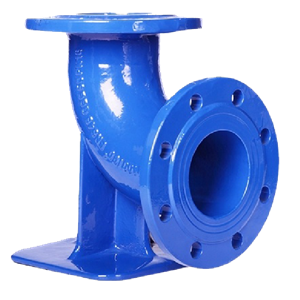
At the two major seasonal wadi crossings on the transmission main route, the design called for above-ground pipe bridging supported on concrete piers. For these sections, Topsun supplied Ductile Iron Double Flanged Pipe Fittings with Puddle Flange at the structure entry and exit points, with standard flanged coupling pipe lengths for the above-ground span. The flanged connections provided the rigid, dismountable joint required for the exposed above-ground sections, where push-on joints would not be appropriate due to the axial thrust forces generated by thermal expansion in the exposed pipe.
5. Challenge Three — Documentation and Customs Compliance
Ethiopia's import documentation requirements for infrastructure project materials are among the most thorough in sub-Saharan Africa. For a government water supply project receiving international development funding, the compliance documentation chain from the Chinese manufacturer to the Ethiopian project site typically includes the following elements, all of which must be consistent and cross-referenced without gaps.
| Document | Issuing Authority | Purpose |
|---|---|---|
| Mill Test Certificate (MTC) | Manufacturing mill (third-party verified) | Confirms iron grade, tensile strength, elongation, and chemical composition per ISO 2531 |
| Third-Party Inspection Certificate | SGS / BV / Intertek (pre-shipment) | Confirms pipe dimensions, lining thickness, and coating weight against the specification before loading |
| Hydrostatic Test Report | Manufacturing mill (per-batch) | Confirms each pipe length passed the factory hydrostatic pressure test at 1.5× PFA rating |
| Certificate of Origin (CoO) | Chinese Chamber of Commerce (CCPIT) | Required for Ethiopian customs tariff classification and project import duty exemption processing |
| Packing List (per container) | Topsun export documentation team | Itemized pipe count by DN, length, and batch number, used for goods-received reconciliation at the site |
| Project Reference Letter | Ethiopian project authority/end client | Confirms goods are destined for a government infrastructure project eligible for duty treatment |
On the Babille project, Topsun's documentation team prepared the full compliance pack for each shipping consignment simultaneously with production scheduling—not after goods were ready to ship. This parallel processing meant that when the factory completed production of each batch, the corresponding document set was already prepared, verified, and ready for submission within 48 hours of the pre-shipment inspection being completed.
The consequence of this approach was zero customs detention delays at Djibouti for any consignment on this project. In our experience across multiple Ethiopian infrastructure deliveries, documentation delays at Djibouti are the single most common cause of project timeline disruption for imported pipeline materials—not production delays, not shipping schedules, and not even road logistics. Getting the paperwork right, in the right sequence, issued by the right authorities, is where experienced suppliers earn their value.
6. Project Outcome and Delivery Performance
The Babille Urban Water Supply Project was successfully commissioned and delivered to the project authority within the contracted supply timeline. The key performance outcomes from Topsun's supply scope are documented below.
| Performance Metric | Target | Achieved |
|---|---|---|
| On-Time Delivery Rate | 100% of consignments within the contracted delivery window | ✅ 100% — Zero consignment delays recorded |
| Goods Rejection Rate at Site Inspection | <1% of total pipe units rejected | ✅ 3 units quarantined at Djibouti, 0 units rejected at site — all replaced from buffer stock |
| Documentation Compliance | Full document set per consignment, zero customs detention | ✅ Zero customs detention events across all project consignments |
| Hydrostatic Test Pass Rate (Field) | ≥98% of field test sections pass on the first test | ✅ All tested sections passed field hydrostatic testing on the first attempt |
| Post-Delivery Technical Support | Responsive technical query handling within 24 hours | ✅ All site technical queries resolved within 24 hours via direct contact with the Topsun project engineer |
Critically, the field hydrostatic test performance—all sections passing on the first attempt—was the outcome we were most focused on during the packaging and logistics phase. A pipeline that leaks on first pressurization, regardless of the cause, creates a cascade of consequences for the main contractor: investigation cost, repair cost, re-testing cost, and most damaging of all, a delay to the project handover that puts the contractor in breach of their performance bond conditions.
That outcome did not happen on the Babille project. And it did not happen by chance. It happened because every process from factory production supervision through transport packaging through pre-site inspection was designed with that specific outcome as the performance target—not documentation compliance or commercial delivery, but clean, first-pass hydrostatic test results in the field.
7. What This Means for Your Procurement Committee
Tender evaluation for African government water infrastructure projects in 2026 operates under increasing scrutiny from both funding bodies and the communities that depend on the outcomes. The shift away from lowest-bid-wins procurement toward capability-weighted evaluation is accelerating—and rightly so.
The Babille project demonstrates five specific capabilities that Topsun brings to every African infrastructure supply assignment.
Inland logistics expertise: We have built specific protocols for long-haul overland transport of ductile iron pipes in sub-Saharan Africa, developed from real project experience on multiple Ethiopian, East African, and West African assignments—not from logistics textbooks.
Documentation discipline: Our export documentation team prepares compliance packs in parallel with production, not after shipment is ready. This eliminates the customs detention delays that routinely add 4–8 weeks to competitor deliveries.
Supply buffer management: We include project buffer stock (typically 3–5% of the ordered quantity, by agreement) and pre-positioned replacement stock in our project plans for high-risk corridors. Site rejection events become administrative events, not timeline events.
Technical flexibility in the field: Our fittings supply strategies account for the reality that African field conditions frequently require routing adaptation. We plan for it, not against it.
Post-delivery accountability: Our project engineers remain contactable and responsive throughout the installation and commissioning phase. When a site query arrives on WhatsApp at 7 am local time from a foreman in Babille, it gets answered before the trench crew starts work.
8. Frequently Asked Questions (FAQ)
Q: Can Topsun provide a verifiable client reference contact for the Babille project for our due diligence process?
A: Yes. Verified procurement authorities and tender evaluation committees may request project reference contact details through a formal written request submitted on organizational letterhead to info@topsunpipelines.com. Reference contacts are provided directly to qualified evaluation bodies and are not published publicly to protect the privacy of client-side project personnel.
Q: Does Topsun manufacture the pipes it supplies, or is it a trading company?
A: Shanghai Topsun Industrial Co., Ltd. is a specialist pipeline trading company with established long-term manufacturing partnerships with certified ductile iron pipe mills in China. This structure allows us to offer competitive pricing from high-volume manufacturers while maintaining independent quality oversight—including third-party pre-shipment inspection by SGS, BV, or Intertek—at each production batch. We do not simply re-sell from a catalogue; we specify, supervise, and verify every order before it leaves the factory.
Q: What other African water infrastructure projects has Topsun supplied?
A: In addition to the Babille Urban Water Supply Project, Topsun has participated in the supply of pipeline materials for the Arjo Dedessa Sugar Industry Development Project and the Dire Dawa Urban Water Supply and Public Health Project, both in Ethiopia. Project reference documentation for each assignment is available upon formal request from qualified procurement authorities.
Q: What is Topsun's standard lead time for ductile iron pipe supply to East African projects from order confirmation?
A: Standard production and shipping lead time from order confirmation to Port of Djibouti is typically 45–75 days, depending on pipe diameter, quantity, and current mill production scheduling. We provide a detailed shipment schedule with milestone dates at contract signing, and update this schedule weekly throughout production. For projects with confirmed funding and fixed site mobilization dates, we recommend engaging Topsun for a preliminary supply planning discussion a minimum of 90 days before the required on-site delivery date.
The communities of Babille now have access to reliable, year-round piped drinking water. For Topsun, that outcome is not a marketing claim—it is the standard we hold ourselves to on every project, because the alternative has consequences that go far beyond a commercial contract.
If your procurement committee is evaluating pipeline suppliers for an African water infrastructure project in 2026, we welcome the scrutiny. Our project records, compliance documentation, and client references are available. We have nothing to conceal and a great deal of verified delivery experience to demonstrate.
Evaluating Pipeline Suppliers for Your African Water Infrastructure Tender?
Topsun provides full project reference documentation, third-party inspection certificates, and compliance document packages to qualified government procurement authorities. Speak directly with our project team today.
Request Reference Documentation WhatsApp Mr. XiaoMr. Xiao
Mr. Xiao is a senior pipeline systems expert at Shanghai Topsun Industrial Co., Ltd. He has personally overseen the supply chain execution of multiple pipeline material contracts for government water infrastructure projects across Ethiopia, East Africa, and beyond, with particular experience in inland logistics management, customs compliance documentation, and pre-shipment quality supervision for African project environments.